



A beautiful piece of land isn’t necessarily a buildable piece of land.
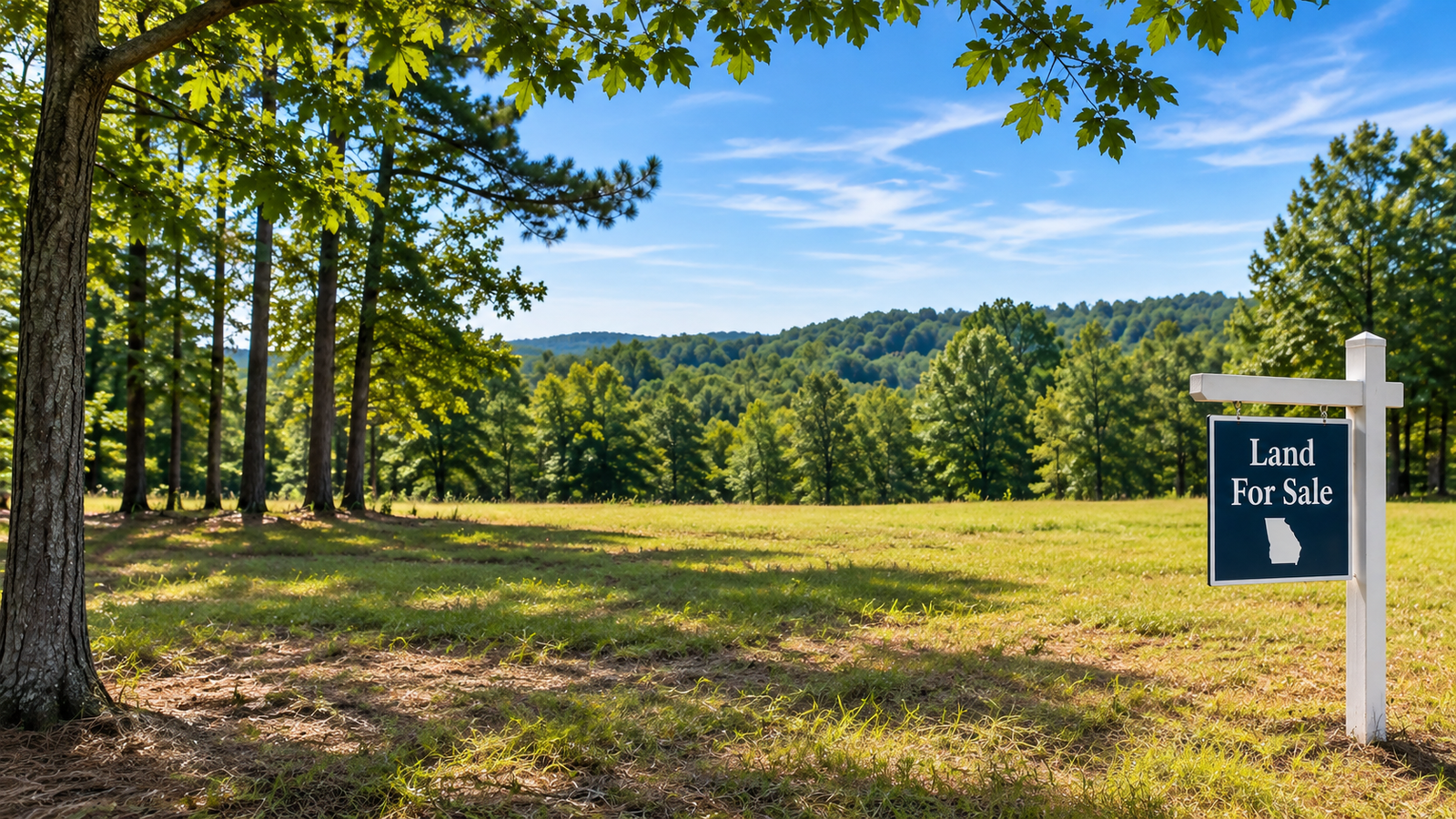
But before purchasing land, there’s a more important question to answer: Can this property actually support what you want to build?
The answer depends on much more than acreage and asking price. Zoning, topography, utilities, stormwater requirements, access, easements, and other site constraints can all influence what can be developed and how much it may cost.
Understanding these factors before purchasing property can help you avoid unexpected expenses, permitting challenges, and costly changes to your plans.
Here are 10 important considerations when evaluating land for development in Georgia.
1. Zoning and Intended Use
One of the first things to investigate is whether your proposed project is permitted under the property’s existing zoning.
Zoning regulations determine how land can be used and may establish requirements for building setbacks, density, lot sizes, building height, parking, and other development standards.
For example, a developer considering a townhome community needs to understand more than whether residential development is permitted. The applicable zoning requirements can significantly influence how many units the property can realistically accommodate.
If the current zoning doesn’t support your intended use, rezoning or additional approvals may be necessary, and approval isn’t guaranteed.
Understanding these restrictions early can help determine whether the property is a good fit for your plans.
2. Setbacks and Buildable Area
A 10-acre property doesn’t necessarily provide 10 acres of developable land.
Building setbacks, buffers, easements, and other restrictions can reduce the portion of a property available for construction. These limitations are particularly important on smaller or unusually shaped parcels, where even modest setbacks can significantly affect the available building area.
A property may look spacious on paper but offer considerably less usable land once all applicable requirements are considered.
When evaluating a property, it’s important to look beyond the total acreage and understand how much of the land can actually be used for your intended development.
3. Easements
Easements are another important consideration that can affect where improvements are located.
An easement generally gives another party certain rights to use a portion of a property. Common examples include utility, drainage, access, and sewer easements.
While an easement doesn’t necessarily prevent development, it may restrict the placement of buildings, pools, retaining walls, parking areas, or other improvements.
Discovering these restrictions after designing a project can lead to unexpected changes and additional expenses.
Identifying recorded easements early allows them to be considered during the initial site planning process rather than becoming an obstacle later.
4. Topography and Grading
Two properties with identical acreage can have very different development potential simply because of their topography.
A relatively flat property may require minimal grading, while a steeply sloped site could involve extensive earthwork, retaining walls, drainage improvements, or adjustments to building placement and roadway design.
These improvements can significantly influence construction costs and the overall feasibility of a project.
Even when a property is technically developable, the amount of grading and site preparation required may change whether the investment makes financial sense.
Understanding the existing terrain before purchasing can help identify potential challenges and provide a clearer picture of what development may involve.
5. Stormwater and Drainage
Stormwater management is one of the most important considerations when evaluating land for development.
When a property is developed, roofs, driveways, roads, parking lots, and other impervious surfaces change how rainwater moves across the site. These changes can increase runoff and create additional drainage and stormwater-management requirements.
Existing drainage conditions are equally important. Water may already flow onto the property from neighboring land, collect in low areas, or travel through established drainage systems.
Depending on the proposed development and local requirements, stormwater detention or other management measures may be necessary. These improvements can affect site design, construction costs, and the amount of land available for buildings or other improvements.
Drainage and stormwater considerations should be evaluated early in the planning process, not after the site layout has already been established.
6. Floodplain and Environmental Constraints
Floodplains, streams, wetlands, protected buffers, and other environmentally sensitive areas can significantly affect a property’s development potential.
The presence of these features doesn’t automatically mean land cannot be developed. However, they may limit where construction can occur, influence the design of the site, or require additional studies, permits, and approvals.
In some cases, these restrictions can substantially reduce the amount of usable land.
A parcel advertised as a certain number of acres may therefore have a much smaller practical development area than expected.
Identifying environmental constraints before purchasing allows you to better understand the property’s limitations and determine whether your proposed project remains feasible.
7. Utilities
Utility availability is another factor that can have a major impact on development costs.
Depending on the project, a property may require access to public water, sanitary sewer or an appropriate septic solution, electricity, gas, telecommunications, and other infrastructure.
It’s important not to assume that utilities are readily available simply because nearby properties have service.
The location of existing infrastructure, available capacity, connection requirements, and potential extension costs can all influence the development process.
For some projects, bringing utilities to the site or making necessary infrastructure improvements can become a substantial expense.
Investigating utility availability early can help identify these potential costs before committing to a property.
8. Site Access
Road frontage doesn’t always guarantee that a property has suitable access for its intended development.
Driveway placement, sight distance, roadway conditions, traffic patterns, and local or state access requirements may all influence how vehicles can enter and exit a site.
Commercial developments and larger residential projects may also require additional consideration of internal circulation, emergency access, entrance design, or roadway improvements.
These requirements can affect both the layout of a project and its overall cost.
Evaluating access during the early planning stages helps determine whether the proposed development can be reasonably accommodated.
9. Erosion-Control and Land-Disturbance Requirements
Most development projects involve some level of land disturbance, whether through clearing, excavation, grading, or construction.
Depending on the scope of the project and the applicable jurisdiction, these activities may trigger erosion and sediment control requirements, land-disturbance permitting, inspections, or specific construction measures.
These regulations are intended to reduce soil erosion and prevent sediment from leaving construction sites and affecting surrounding properties and waterways.
Understanding the applicable requirements before construction begins is an important part of the planning and permitting process.
Identifying potential permitting needs early can help reduce delays and avoid unexpected issues when the project is ready to move forward.
10. Overall Development Feasibility
Perhaps the most important consideration is how all of these factors work together.
A property may meet the basic zoning requirements for your intended use, but setbacks could reduce the available building area. Stormwater management may require additional space, while steep terrain could increase grading costs. Utilities might be available, but extending them to the property could add significant expense.
Individually, these challenges may be manageable. Together, they can substantially affect the scope, design, and financial feasibility of a project.
This is why evaluating development feasibility involves more than determining whether something can be built on a property.
The more important question is whether the property can reasonably support the specific project you have in mind.
Why Investigating Land Before You Buy Matters
Once you’ve purchased a property, its constraints become part of your project.
Before purchasing, however, you have more flexibility. You may be able to adjust your proposed development, investigate potential issues further, negotiate based on what you discover, or determine that another property is a better investment.
For developers and investors, early feasibility work can provide valuable insight into whether a potential project justifies the investment.
Consider two 10-acre properties listed at similar prices. One may have favorable topography, available utilities, suitable access, and relatively few development restrictions. The other may have steep terrain, drainage challenges, easements, and limited utility access.
Although both properties contain the same acreage, they may have very different development potential and associated costs.
The value of land for development isn’t determined by acreage alone. It’s also influenced by what can realistically be built on it.
Where Does a Civil Engineer Fit In?
You don’t necessarily need a completed engineering design before deciding whether to purchase a property.
The purpose of early feasibility work is to identify significant site constraints and better understand whether the land appears capable of supporting the proposed development.
Depending on the property and intended use, a civil engineer can help evaluate site layout, grading, drainage, stormwater management, utilities, access, erosion control, and overall development feasibility.
Civil engineers may also coordinate with surveyors, architects, environmental consultants, geotechnical engineers, and local authorities when additional information or expertise is needed.
Involving the appropriate professionals early can help identify potential challenges before they become expensive problems.
Considering Land in Georgia? Talk to AQA Before You Develop.
At A Quality Approach (AQA), we provide civil engineering services for residential, commercial, and land-development projects throughout Georgia.
Whether you’re considering property for a new home, subdivision, townhome community, commercial development, or another project, our team can help evaluate the civil engineering considerations that may affect your plans.
Our services include site planning, development feasibility, certified site plans, stormwater and hydrology, erosion control, and permitting assistance.
Before asking only, “Should I buy this property?” consider one more question:
“Can this property support what I want to build?”
Considering a property? Contact AQA Engineering to discuss what you’re hoping to develop and how we can help you take the next step.